




.svg)











About the Report
The impact of the COVID-19 pandemic on lung cancer screening and diagnostics has been profound, and advances in treatment and development of new technologies have been severely curtailed through this period. This report looks at how cancer screening and diagnostic services were affected around the world and considers some of the actions that have been taken to tackle the difficulties – and the promise they hold for future efforts.Report Summary
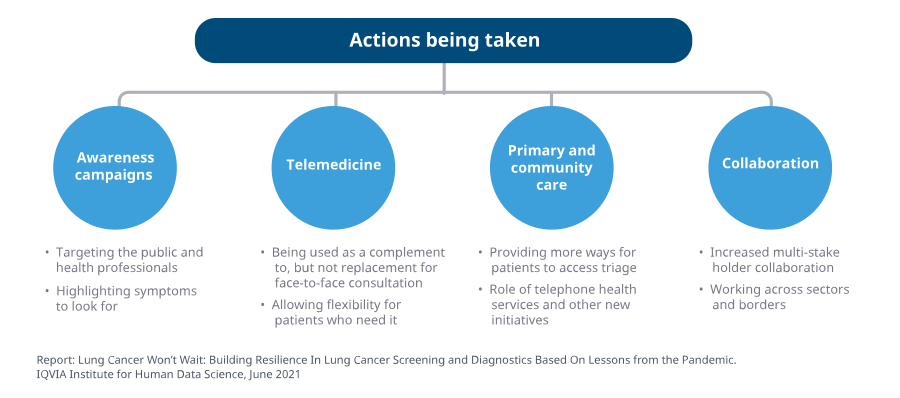
The report provides a view to the future and what will be needed to reduce the backlog of patients and to resume services effectively, taking into account the ‘new normal’ and the likelihood that COVID-19 will continue to be present even when the pandemic is over. It considers how we can do this effectively and acknowledges the value of technology and innovations in diagnosis and treatment which are currently being developed, and how they can help to ensure that services are rebuilt more effectively. Awareness campaigns, telemedicine, primary and community care, and collaboration will also be of ongoing critical importance.
The report also finds that the opportunity to use the impact of the COVID-19 pandemic as a way to accelerate positive change is universally recognised.
Key Findings
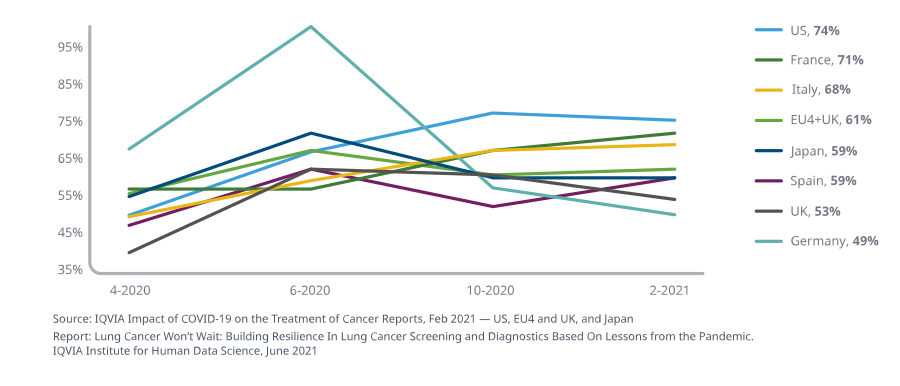
Exhibit 1: Oncologists' Caseload Percentage Caseload vs Pre-COVID-19 Phase
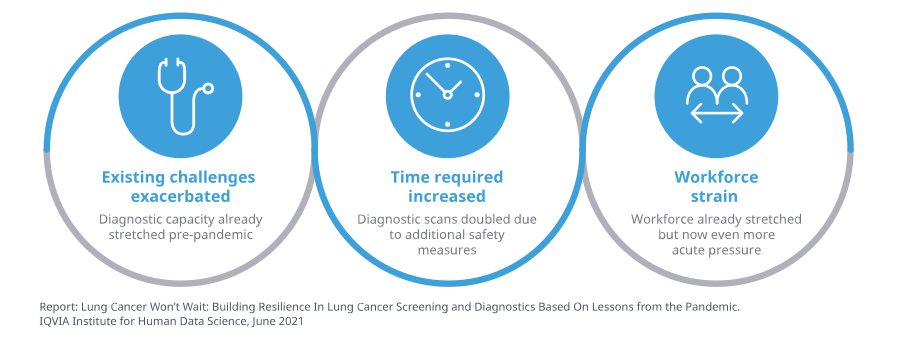
- The pressures caused by the COVID-19 pandemic exacerbated the existing diagnostic capacity challenges that lung cancer services face.
- The introduction of additional infection control measures, including the usage of personal protective equipment, preadmission testing, increased scanner cleaning, and separation of COVID-19 negative and positive patient flows, meant that the time required per diagnostic scan almost doubled (UK). This means that patients are not only presenting late but also take longer to progress through the diagnostic pathway. As referrals are increasing, addressing the considerable backlog of outpatient appointments with half of the pre-COVID diagnostic capacity is likely to lead to considerable bottlenecks within lung cancer services.