













SUBSCRIBE
IQVIA Blog Digest
For all the latest industry insights, please subscribe to the IQVIA U.S. blog digest.
In the first article in our series on the value of real world evidence (RWE) and real world data (RWD) to medical device companies, we reported on regulators’ growing acceptance of external evidence for their decision-making. While the regulatory landscape is changing globally, not all regions of the world afford equal access to the kind of data most useful to medical device manufacturers’ market access and health economics and outcomes research (HEOR) teams.
MedTech companies operating in the U.S. are fortunate in that RWD is readily available from a variety of sources (Figure 1). Whether it’s at the global, regional/national, or local level, data can be obtained to determine, demonstrate, and communicate the value of a medical device to various stakeholders.
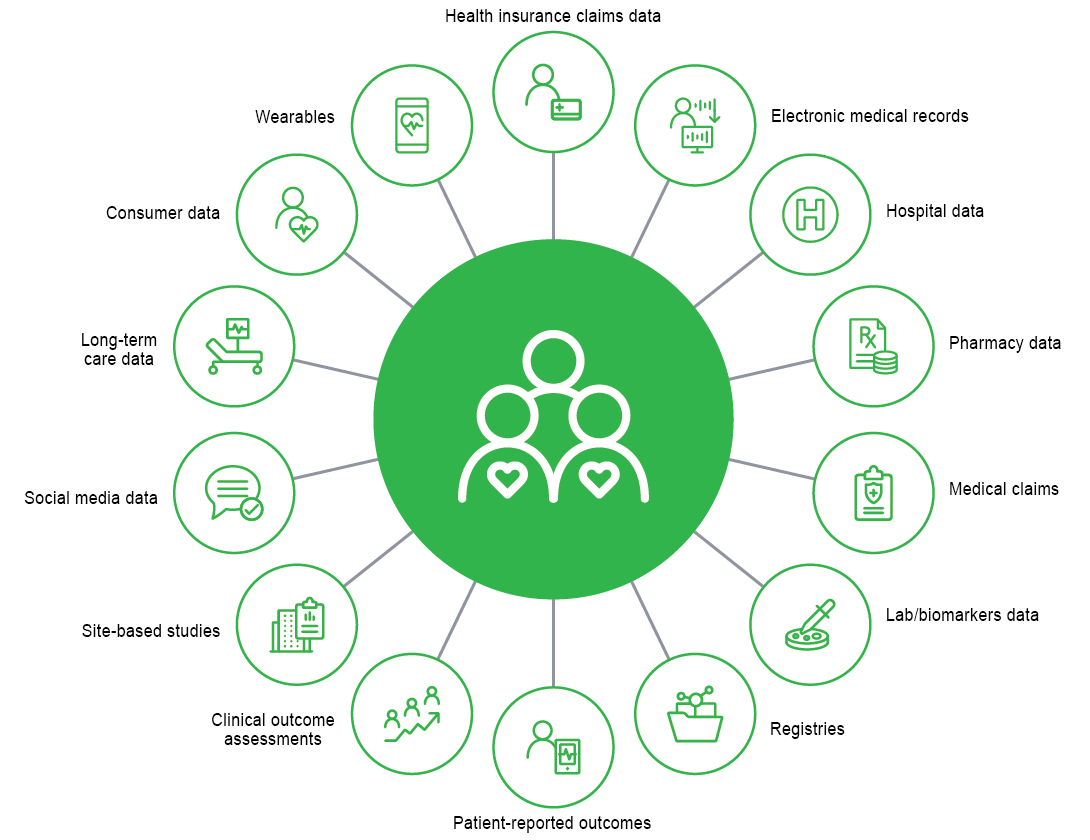
One readily available data asset for quantifying a medical device’s value proposition is IQVIA PharMetrics® Plus for MedTech, a closed database of adjudicated medical and pharmacy claims in the U.S. This includes cost information (payer allowed and paid amounts), patient demographic characteristics, as well as diagnosis and hospitalization details. The data asset, which maintains a history dating back to 2010, provides a view of the entire patient journey, which is a mile wide and an inch deep, with the following applications across the product lifecycle.
To obtain deeper, device-specific insights, PharMetrics Plus for MedTech can be deterministically linked with other data sources such as
Via linkage, analysis that was previously restricted to being a mile wide and an inch deep can take a view that is a mile deep and an inch wide at certain points along the patient journey.
There are countless possibilities for using RWE to support your evidence needs. The next blog in this series reviews a range of real-life use cases and successes so you can more clearly see how MedTech may be able to benefit from RWD and RWE, too.

Related solutions
IQVIA is using vast quantities of data in powerful new ways. See how we can help you tap into information from past trials, patient reported outcomes and other sources to accelerate your research.
Combine data science, technology, and analytics driven by artificial intelligence to support new efficiencies and business insights -- without additional capital investment.